
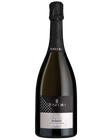
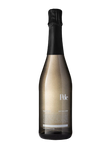

Sparkling, semi-sparkling or still – did you know that prosecco comes in three different forms?
Most people today know prosecco simply as a bubbly drink. A popping cork, fresh fruitiness, lively bubbles – that's what comes to mind. But prosecco's story is far more nuanced. There is a classic sparkling version, a softer semi-sparkling one, and a completely still one.
In this post we look at how Spumante, Frizzante and Tranquillo differ, and why all three are worth getting to know.
Prosecco wasn't always bubbly
It sounds odd today, but prosecco did not start out as a sparkling drink. Until the 1600s it was made only as a still wine.
Secondary fermentation – the process that creates the bubbles – was unknown for a long time. Its first written mention was recorded in England in 1662, although popular belief long linked the discovery of sparkling wine to Dom Pérignon.¹
Later, Federico Martinotti played an important role in shaping prosecco's fresh, bubbly character today by inventing the tank method. Eugène Charmat developed the method further, and from the early 1900s the Charmat method became one of the defining technologies of prosecco production.²
Spumante – the classic sparkling prosecco
Spumante is what most people mean by prosecco. It's the classic, lively sparkling version: a popping cork, a wire cage, fresh fruitiness and a festive mood.
In a Spumante the bottle holds at least 3.5 bar of pressure. That gives the characteristic pop you hear when you open it. The mushroom-shaped cork and wire cage – the muselet – aren't just decoration but a requirement, since they hold the pressure safely in the bottle.
Spumante prosecco spends at least 30 days in an autoclave, a pressure-resistant tank. Premium wines, however, can rest much longer, even several months. The longer this time, the finer and silkier the bubbles can be.
Spumante makes up the vast majority of prosecco production today. If you look for prosecco in Budapest or anywhere in the world, this is most likely the type you'll meet first.
Col Fondo – the bottle-fermented exception
Alongside Spumante there is also a rare, more traditional version: bottle-fermented prosecco, known as Col Fondo or Sui Lieviti.
Many consider this style one of the oldest forms of "real" prosecco, since before the tank method spread, secondary fermentation often took place right in the bottle.⁴
Col Fondo prosecco is usually cloudier, livelier and more complex than the familiar clear Spumante. Its character is more rustic and natural, and it gives a completely different experience. Only a small share of all prosecco, around 5%, is made this way.³
Frizzante – the semi-sparkling middle ground
Frizzante is the softer, lighter face of prosecco. The bubbles are less intense than in a Spumante, and the pressure is usually between 1 and 2.5 bar.
The lower pressure gives the wine a lighter, more easy-drinking character. Frizzante is less ceremonial but very likeable: fresh, relaxed, fruity, and often a great choice for chatting with friends, light dishes or everyday toasts.
It's worth knowing that Frizzante prosecco can meet the DOC or DOCG criteria just like Spumante. It isn't a lower category, simply a different style.
The closure can differ too. Higher-pressure Frizzante may need a regular cork, while lower-pressure versions can have a simpler closure. Good examples are Borgo Antico Nisà, which sits right around the 2.5 bar limit, and Toni Doro Panein, a lighter frizzante style.
Tranquillo – the original prosecco almost nobody knows
Tranquillo is the still, bubble-free version of prosecco. Historically it is the oldest form, but today it's a real rarity.
It can be made as DOC or DOCG, with the same care as the sparkling versions, just without secondary fermentation. No popping cork, no fizz – only the pure, mineral, fruity character of the Glera grape.
That is exactly what makes Tranquillo special: it shows what prosecco is like without the sparkle. It's an exciting style for anyone who wants to understand Glera more deeply.
For example, only about 2,000 bottles a year are made of Borgo Antico's still Prosecco DOC.⁵
The three types at a glance
The three main types of prosecco give different experiences, but all three show a different face of the same world.
- Spumante: at least 3.5 bar, lively bubbles, mushroom cork and wire cage, the classic prosecco experience.
- Frizzante: 1–2.5 bar, softer bubbles, lighter and more relaxed character.
- Tranquillo: no bubbles, still prosecco, pure and mineral Glera character.
In terms of production, Spumante is by far the most common (95%), Frizzante is a much smaller share (4%), and Tranquillo (1%) is a true rarity.
Which one should you choose?
If you want the classic prosecco experience, choose Spumante. It's the best-known and most festive style – perfect as an aperitif, a gift or for a toast.
If you're after something lighter and more relaxed, Frizzante may be the one. Less intense, friendlier, and great with light dishes or long conversations.
And if you want to taste something truly rare, try Tranquillo. It's prosecco's still, almost forgotten face, and it gives a special insight into the true character of Glera.
In short
The world of prosecco is far richer than just a bubbly drink. Spumante, Frizzante and Tranquillo are three different styles, three different moods and three different occasions.
You'll find all three in the Prosecco Journey range, imported directly from Italian growers. What you taste isn't relabelled stock but the result of a real relationship with the grower.
1 Nick Higham: Did the English invent bubbly before Dom Perignon? BBC News, 2017.05.20 – Link
2 Jeremy Parzen: A note on the history of the "tank" method of sparkling wine production. Lini910, 2018.10.26 – Link
3 Debbie Gioquindo: Prosecco Fermented in the Bottle. Hudson Valley Wine Goddess, 2017.10.26 – Link
4 Kerin O'Keefe: Col Fondo: The Murky Case of the Cloudy Wine. Kerinokeefe.com, 2019.10.22 – Link
5 The Consortium – prosecco.it