


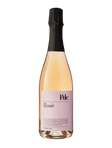
The first time we came across a prosecco labelled Rive, to be honest, we didn't think much of it. It had DOCG on the bottle, so we were sure it would be good.
I still remember: it was the first Extra Brut prosecco that really grabbed us.
By then we were at home with Extra Dry and Brut, but Extra Brut – especially a Rive – was still unfamiliar territory.
We asked what we should know about this bottle. The answer was short and time was tight: we had left Budapest at dawn and it was already the end of the day. All that stuck was that Rive proseccos come from steep vineyards and are harvested by hand.
A few days later, on our way home, we deliberately looked for the word Rive on shop shelves. Surprisingly, we found quite a few – usually in the higher price range. We bought some to taste at home with friends.
Of course the question came straight away:
"So what makes it special?"
I proudly shared the two things we knew. That only led to more questions, so we started digging. From then on we took every chance to ask, taste and learn – and slowly the picture came together.
What exactly does DOCG Rive mean?
After Cartizze, DOCG Rive is one of the highest categories in the world of prosecco.
Rive means a prosecco that comes from a steep vineyard tied to a single municipality or hamlet. The designation highlights the character of that specific place – its terroir.
In other words, Rive isn't just a word on the label. It's the story of a specific place in a bottle.
The Conegliano Valdobbiadene DOCG area covers 15 municipalities, or comuni in Italian. Within them are smaller units called frazioni, or hamlets.
For example, Farra di Soligo is a municipality and Col San Martino is one of its hamlets. Depending on exactly where the vines are, the producer can put one or the other on the label.
 Example: Farra di Soligo as the comune, Col San Martino as the frazione
There are currently 43 officially recognised Rive areas. The list was finalised in 2019.
What should you know about Rive prosecco?
Rive proseccos follow stricter rules than the broader prosecco categories. A few of them are particularly important.
- Only Spumante can carry the Rive designation.
- Bottle pressure is usually above 3.5 bar.
- Styles range from Dry to Extra Brut, though Dry is rarer.
- At least 85% Glera is required.
- Some wineries work with 100% Glera.
- The Rive areas cover about 250 hectares in total.
- Yields are capped more tightly: at most 13 tonnes per hectare.
- By comparison, Prosecco DOC can reach 18 tonnes per hectare.
The three big zones of Rive
It's worth knowing that Rive boundaries don't always match the terroir zones exactly, so the area is usually divided into three larger macro-zones: east, centre and west.
Eastern zone
The eastern area has lower, gentler hills, roughly 70–170 metres high, with slopes usually between 10 and 20%.
Temperature swings are bigger, rainfall is lower and the grapes typically ripen earlier. This makes the area especially suited to Brut and Extra Brut prosecco.
Central zone
The central area is the most spectacular and often the hardest to work. This is where the steepest vineyards are, usually at 150–450 metres.
The vineyards are hard to reach, and in many cases the work really does take manual labour and great care. Temperature swings are smaller and there is more rain.
The north–south orientation matters too: forests often run along the north side, vineyards along the south.
Western zone
The west is one of the cradles of classic prosecco style. It runs east from Valdobbiadene at roughly 180–230 metres.
Temperature swings are more moderate and the grapes usually ripen later. The area is known for elegant, balanced proseccos.
In short: what makes Rive different?
Rive is the elite of DOCG prosecco. Every Rive prosecco is DOCG, but not every DOCG prosecco is Rive.
The difference is simple:
- DOCG proseccos can be made from selected grapes from anywhere in the DOCG area,
- DOCG Rive proseccos are tied to a specific, named vineyard, municipality or hamlet.
That's why Rive wines are more limited, more characterful and often more memorable. If you really want to understand how varied prosecco can be, a bottle of Rive is a very good place to start.